
Transforming Your Edinburgh Home with Professional Grinding and Polishing Techniques for Terrazzo Floors: If your home in Edinburgh boasts exquisite terrazzo flooring, you may grapple with two critical concerns: enduring a floor that looks worn and lifeless or risking irreversible damage through improper restoration methods. Grinding and polishing can breathe new life into your flooring, yet they may also uncover underlying issues that a simple clean could momentarily conceal.
In residences that prioritise heritage preservation, the emphasis must lie on safeguarding the floor's inherent character and structural integrity. Every decision should reflect heritage sensitivity, ensuring that the unique historical essence of the floor is respected while achieving an aesthetically pleasing finish.
Key Considerations for Effective Terrazzo Restoration in Edinburgh
- Grinding a terrazzo floor proficiently eliminates a worn surface layer and corrects any unevenness present.
- Polishing enhances the visual appeal by amplifying clarity and sheen, although it does not make the floor immune to damage.
- A specialist's recommendations are based on the condition of the floor rather than personal preferences, initiating with what the surface can safely endure.
- Some degree of discolouration and visual irregularities may linger, particularly in older floors that have undergone previous repairs or wear.
- The most resilient outcomes arise from thorough preparation, realistic expectations, and ongoing maintenance following restoration.
Why Is Grinding and Polishing Vital for Edinburgh Terrazzo Floors?
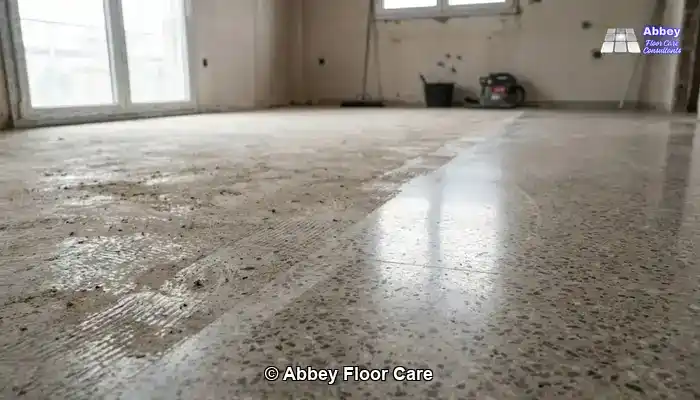
Although grinding and polishing are often regarded as interchangeable methods for finishing a floor, the reality is considerably more complex. Terrazzo surfaces may have aged, softened, and absorbed various contaminants over the years. A professional's foremost responsibility is to accurately evaluate the floor's needs based on its actual condition, steering clear of generic marketing narratives. This approach underscores the importance of inspection-led decisions rather than assumptions.
This is why it is crucial to thoroughly clarify the process before selecting any machinery; ensuring the safest and most effective outcome necessitates aligning the restoration technique with the floor's condition, rather than compelling the floor to conform to a predetermined method. Maintaining focus on surface degradation is essential throughout this undertaking.
For homeowners seeking guidance on whether grinding or polishing is appropriate for their terrazzo floors, a professional terrazzo grinding and polishing assessment in Edinburgh can provide the necessary condition-led insights prior to undertaking any irreversible restoration work.
What Is Terrazzo and How Does Its Surface Evolve Over Time?
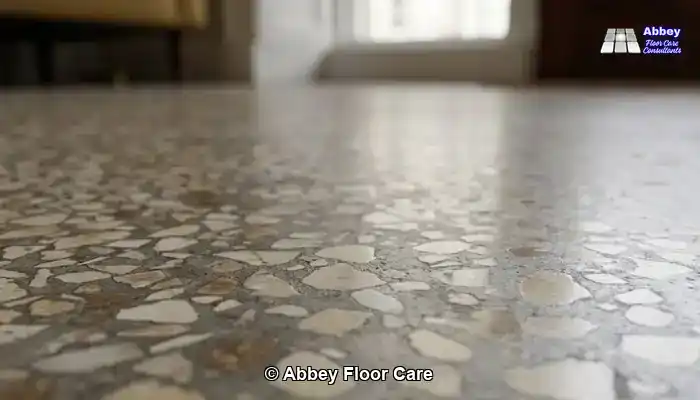
Typically, domestic terrazzo features a cement-based surface with marble chips embedded within a Portland cement binder. As time elapses, this binder can become increasingly porous and absorbent. In the context of Edinburgh residences, this is significant because the visual quality of the floor is often influenced by what has seeped into the binder over time, rather than what remains on the surface. Consequently, a “dull” appearance may indicate cement binder wear instead of merely reflecting a cleaning issue.
Once contaminants infiltrate the binder, the floor may continue to exhibit a greyish hue even after thorough cleaning. This phenomenon occurs because the visible surface mirrors the embedded conditions rather than the superficial cleanliness, highlighting why embedded soil can present a persistent challenge in maintaining terrazzo flooring.
How Does Grinding Affect Terrazzo Floors?
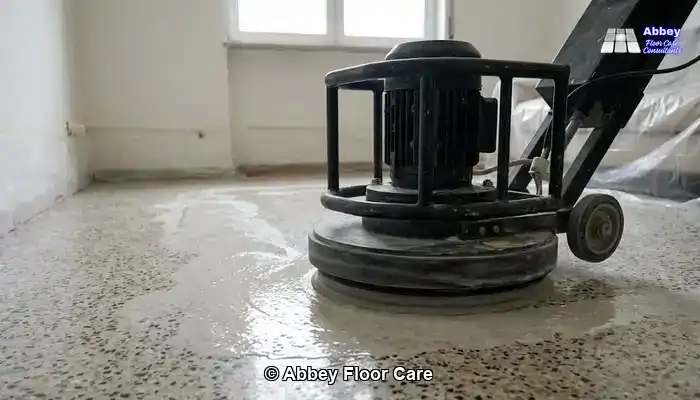
Mechanical grinding serves as a controlled resurfacing technique specifically designed to eliminate the top layer of damage and can also address issues like lippage on uneven floors. Within Edinburgh homes, it is crucial to understand that grinding is not merely an additional polishing step; it is a deliberate measure that fundamentally transforms the floor's surface by removing material. A specialist will recommend this process only when the floor’s condition necessitates it and when it is safe to proceed, with material removal treated as a serious, irreversible action.
As grinding reveals what has been concealed beneath the surface, a restorer will often first stabilise any cracks or older channels using resin repair filler. This preparation is essential for allowing the floor to be refinished as a cohesive surface, which falls under the broader category of structural repairs.
How Do Honing and Polishing Improve the Floor's Finish?
Honing represents the refinement stage that follows grinding, while polishing is an optional process aimed at achieving a higher sheen. In Edinburgh, the critical question is not simply “gloss or matte?” but rather which level of refinement aligns best with the floor’s actual condition and the homeowner’s preferences. A higher sheen can create a striking visual impact but may also wear more quickly, making the selection of the finish an important long-term decision rather than a fleeting aesthetic choice.
At times, a specialist may apply a densifier to enhance the potential for achieving a higher polish where suitable. However, the guiding principle remains that the chosen finish must be appropriate for the surface’s true condition, rather than based on an unrealistic showroom standard. It is vital to anticipate long-term wear rather than overlook it.
Why Are Grinding and Polishing Different Processes?
Although grinding and polishing may appear similar because both utilise diamond abrasives, they serve distinct purposes and yield different outcomes. In the context of Edinburgh terrazzo, grinding addresses issues like wear, contamination, and surface irregularities, whereas polishing focuses on enhancing clarity once the floor is sound. Thus, professionals avoid treating these two processes as interchangeable solutions, particularly when lippage correction or deeper surface damage exists.
When homeowners request “just a polish,” a skilled restorer will clarify that polishing cannot rectify deeper wear patterns or unevenness hidden beneath the surface. The correct sequence of restoration must arise from inspection-led decisions rather than personal preference.
What Are Realistic Expectations for Grinding and Polishing?
Even the most exceptional restoration work has its limitations, and terrazzo surfaces are particularly transparent about these constraints. The Portland cement binder may retain historical discolouration and older contaminants that might not completely lift, even after rigorous resurfacing. In Edinburgh, the most prudent approach to managing expectations is to distinguish between what improvements can be achieved and what may persist, as some visual variations are an inherent result of age and surface degradation, not indicative of inadequate work.
Moreover, it is essential to recognise that a higher sheen does not protect the surface from future markings or chemical dulling. Polished surfaces can exhibit traffic patterns more quickly, which is why heritage sensitivity involves selecting a finish that accommodates everyday use, rather than merely prioritising the initial shine.
How Do Specialists Assess a Terrazzo Floor's Suitability for Restoration?
A professional evaluation focuses on the floor's load-bearing capacity, as the appropriate thickness for resurfacing depends on both the condition of the floor and the stability of the underlying structure. In Edinburgh properties, this often requires a close examination of existing cracks, previous patchwork, and the root causes of any movement. Consequently, decisions are grounded in structural repairs and stability rather than just visual aesthetics.
The critical boundary lies in confirming that the safe resurfacing depth cannot be determined without observing the floor within its context. For this reason, responsible restorers treat material removal as conditional and not automatic.
What Does Ongoing Care Entail After Terrazzo Restoration?
Once a terrazzo floor has undergone refinishing, the focus shifts to maintaining a clear surface for an extended duration by minimising absorbency and reducing unnecessary wear. In Edinburgh homes, an impregnating sealer is frequently applied to manage the absorbency of the Portland cement binder. However, it is vital to understand that while it facilitates easier cleaning, it does not render the surface impervious to wear, as the persistent realities of embedded soil and wear remain contingent on daily habits.
Optimal, enduring results typically arise from treating the floor as a finished surface that requires protection from harsh cleaning products and unnecessary abrasion. The selection of the finish should align with the household's actual usage patterns rather than idealised conditions.
When Should You Seek a Professional Assessment?
If your terrazzo floor appears grey even after cleaning, if cracks are visible, or if you suspect unevenness, the most logical next step is to arrange a professional terrazzo assessment in Edinburgh. This assessment will clarify the current state of the floor and outline what is realistically achievable before committing to any grinding or polishing.
A competent restorer will provide a straightforward explanation of the trade-offs involved, establish reasonable limits without ambiguity, and clearly outline what the restoration work can and cannot accomplish. This transparency enables you to proceed with realistic, clear long-term wear expectations.
Further Insights on Terrazzo Floor Restoration Techniques
Grinding and polishing are not merely choices to select from a menu; they are specialised tools employed in a precise sequence dictated by the condition of the floor. Achieving the safest results requires sound judgement, meticulous sequencing, and a clear understanding of the inherent limitations—especially when dealing with floors that possess historical significance, age, and value.
Conducting a condition-led terrazzo assessment fosters informed decision-making, ensuring that the long-term health and beauty of your flooring is prioritised.
Introducing the Expert in Restoration
David Allen is a seasoned specialist in natural stone and tile restoration, boasting over 30 years of hands-on experience in rejuvenating floors across the UK. His expertise encompasses terrazzo as well as a diverse array of stone and tile surfaces, with a strong emphasis on careful mechanical refinishing, repair-led restoration, and practical advice designed to assist homeowners in safeguarding their floors for the long haul.
The article Understanding the Impact of Grinding and Polishing Terrazzo in Edinburgh Homes was first published on https://www.abbeyfloorcare.co.uk
The article Understanding the Impact of Grinding and Polishing Terrazzo in Edinburgh Homes appeared first on https://fabritec.org
The Article Grinding and Polishing Terrazzo: Impact on Edinburgh Homes Was Found On https://limitsofstrategy.com



Your exploration of terrazzo floor restoration in Edinburgh certainly sheds light on an often-overlooked aspect of home care—balancing aesthetic appeal with the preservation of heritage. As someone who has navigated the challenges of maintaining historic flooring in a period property, I can appreciate the delicate dance between rejuvenation and preservation.