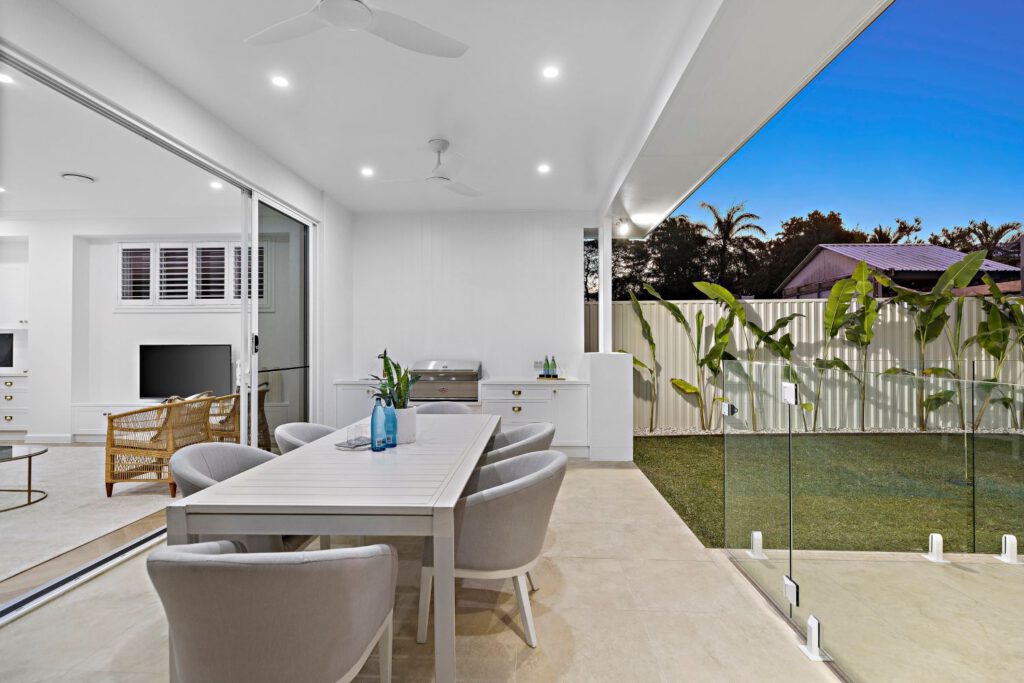
Choosing to build a bespoke home in Brisbane is an exhilarating decision! there is an important consideration that might not be immediately apparent: should you enlist the services of a professional architect to create your designs, or should you choose a builder’s in-house designer? This choice can profoundly influence your entire building journey.
Both paths will lead to a finished home, yet they provide vastly different experiences, expenses, and timelines. Numerous families in Brisbane find themselves halfway through the architect route, only to discover that their budget and plans are misaligned—a reality that is often overlooked at the outset.
This article offers a candid comparison of both options. As builders, we present our viewpoint. We do not suggest that architects are inferior—they undoubtedly are not. Our aim is to clarify when hiring an architect is advantageous, when a builder’s designer may be the wiser choice, and how your budget influences the entire process.
Discovering the Essential Functions of an Architect in Home Design
Architects are highly skilled design professionals who dedicate years to mastering the intricacies of spatial functionality, the dynamics of natural light, and crafting designs that are specifically tailored to the site and its future inhabitants. The most talented architects excel in delivering exceptional results.
By opting to collaborate with an architect, you engage a design expert who is exclusively focused on your requirements, independent of any builder. Their responsibilities encompass:
- Conducting an in-depth exploration of your brief — taking into account site specifics, your lifestyle, daily habits, and the desired ambiance of your new home.
- Creating both conceptual and detailed plans — usually presenting multiple revisions that are not only innovative but also visually striking.
- Overseeing the design intent during the construction phase — making site visits to ensure that the project remains true to the original plans.
- Gathering tenders from builders — securing competitive quotes from various builders for your consideration.
These advantages are considerable, particularly if design quality is your foremost priority. An architect can achieve what a builder’s in-house designer may find challenging.
One crucial aspect that is often overlooked is the architect’s limited daily engagement with the construction budget, which can result in unforeseen challenges.
Unpacking the Advantages of a Builder’s In-House Designer
A builder’s designer works within the construction firm itself. They produce plans akin to those of an architect—conducting site analysis, generating floor plans, and creating elevations—but with an emphasis on construction costs from the outset.
At Iconic, when we develop plans, we are acutely aware of the current costs of materials and construction techniques. We know the price of the slab per square metre and the expenses associated with the windows you are considering. We understand how opting for a 2.7m ceiling height over the standard 2.55m affects your budget. This pricing knowledge is integrated into our design process from the beginning.
This approach radically transforms the discussion. Rather than generating a stunning set of plans only to discover that the build exceeds your budget by $250K, you make informed financial decisions as the designs progress. You can weigh the financial implications of a larger pantry before you become enamoured with it.
Another benefit of this model is the seamless collaboration between the design and construction teams. The designers and builders function as a unified team, reducing the chances of miscommunication or misunderstandings on-site.
Assessing the Financial Aspects: A Thorough Overview
Homeowners frequently encounter surprises when they discover the financial disparities between the two options.
Architect pathway:
- Architect fees: typically range from 8% to 15% of the total build cost. For a $1M custom home in Brisbane, this equates to a minimum of $80,000. For a premium build costing $1.8M, anticipate paying from $150,000+ exclusively for architectural fees, prior to construction commencing.
- Additional documentation and consultant fees — which may include engineering assessments, energy ratings, and occasionally separate interior design costs.
- Tender period: typically spans 4 to 8 weeks while builders compile their quotes.
- Variation costs during construction: often unpredictable (more on this in the following section).
Builder’s designer / design-and-build pathway:
- Design fees included in the build contract — often as a design phase deposit credited against the overall build cost or integrated into the per-square-metre pricing.
- No separate tender period — as you are already collaborating with the builder.
- Faster transition from initial design to final handover — typically 3 to 6 months shorter in total.
We will not provide a comparison spreadsheet, as every project is unique. For a typical $1M family home in Brisbane, the architect path can incur between $80K and $130K in additional fees not associated with the design-and-build pathway. This amount could fund a swimming pool or a significant kitchen upgrade—it’s a considerable financial consideration.
For a detailed breakdown of Brisbane custom home budgets, refer to our accompanying article, “How Much Does It Cost to Build a Custom Home in Brisbane?” which delves into costs in detail.
Addressing the Variation Challenge Head-On
This concern is common and often unanticipated, frequently leading to costs that exceed merely the design fees.
When an architect creates plans without the builder’s involvement in the pricing process, two scenarios frequently arise during the tender phase:
- The plans exceed the budget. You might find yourself needing to redesign (incurring additional architect fees and time), or you could opt to proceed, hoping to secure the extra funds.
- The plans seem to align with the budget on paper, but the builder has made assumptions and allowances that do not match your actual preferences. You may encounter allowances for basic fixtures, standard materials, and typical ceiling heights. As the build progresses, any desired upgrades result in variations—change orders that carry their own costs.
We have seen architect-drawn projects incur $80K to $200K in variations on a $1M build. This occurs not due to mistakes but because the design and budget were not reconciled before construction commenced.
In a design-and-build arrangement, variations still happen (no project is entirely free of them), but the frequency is considerably lower because budget discussions occur during the design phase rather than during construction. For a thorough understanding of how variations function, consult our article that explores this topic—it’s essential reading before signing any building contract.
Recognising When Hiring an Architect is the Best Option
We understand that this comparison is not universally applicable. There are specific situations where enlisting the services of an architect is genuinely the best option:
- Heritage overlays or extensions on character homes that require careful navigation of council and heritage regulations.
- Challenging sites — such as steep slopes, flood-prone areas, irregular shapes, or designs that must account for specific views where every angle matters.
- Statement homes where the design itself is the focal point—those that earn architectural awards, feature in magazines, or are intended to be standout projects.
- Clients with flexible budgets who are willing to invest more for specialised design services.
- Projects where you already have a builder lined up who is comfortable working with the architect’s documentation and where you have a trusted relationship.
If your project falls within one of these categories, it is wise to engage an architect. Select a builder who collaborates effectively with that architect to ensure both parties are involved from the beginning. This can lead to a successful project.
Understanding When a Builder’s Designer is Your Optimal Choice
For the majority of Brisbane families embarking on a custom home build—which includes most, but not all—a builder’s in-house designer typically proves to be the more fitting choice. Here are the key scenarios:
- You have a specific budget that you must adhere to. This is not just a guideline, but a strict budget that carries serious implications if exceeded.
- You prefer a single cohesive team, one contract, and one point of responsibility. This approach avoids any blame-shifting between architect and builder if issues arise.
- You want to move into your new home sooner. Reducing the tender period and streamlining communication saves valuable time.
- You appreciate a well-designed family home but are not seeking architectural accolades. You desire a home that looks inviting, functions effectively, suits your block, and remains within your financial means.
- You prefer to avoid managing two professional relationships during what is likely to be a stressful 12 to 18-month process.
Most custom home buyers fit this description. They are not creating a showpiece but rather a home in which they can nurture their family. For this purpose, maintaining design integrity within budget is more significant than opting for premium design specialisation.
An Overview of the Iconic Design-and-Build Framework
We won’t explore every detail, but here’s a schematic overview to illustrate how we maintain your budget:
- Initial consultation and feasibility assessment. We evaluate your block, brief, and budget upfront. If your vision does not align with your budget, we communicate that before any design fees are incurred.
- Concept design with live pricing. As sketches and plans evolve, they include cost estimates. You’ll see the financial impact of every choice as you make it.
- Detailed design and selections. Fixtures, finishes, and inclusions are all priced into the contract before you sign, avoiding vague “allowances” that might surprise you later.
- Fixed-price contract. The price you sign for is what you will pay, minus any genuine variations you opt to make.
- Construction phase. The same team remains accountable—it is the same person you’ve been collaborating with since day one.
By managing both design and construction, we can confidently offer a fixed price—not by compromising quality but by knowing precisely what we will build before you sign anything. For insights into each stage of the build process, our walkthrough covers the construction phase in its entirety.
This same approach facilitates a smooth knockdown rebuild in Brisbane, preventing unforeseen issues. The design-and-build methodology becomes even more critical when dealing with an existing home and a constrained block.
Answers to Common Questions Regarding the Choice Between an Architect and a Builder’s Designer
Do architect-designed homes generally achieve higher resale values?
In certain circumstances—particularly in established suburbs where character and design quality enhance property value, or for homes of notable architectural merit. for most family homes in developing areas, the increase in resale value does not typically offset the additional design fees. Factors such as land value, location, and the quality of construction often hold greater significance in buyers’ decisions than the identity of the designer.
Is it feasible to use an architect and still receive a fixed-price contract from a builder?
Yes, although it can be more complex. Most builders will only offer a fixed price on architect-drawn plans after thoroughly reviewing the documentation and incorporating contingencies for any uncertainties. This contingency is factored into your price, which often results in a higher overall cost. Design-and-build contracts, on the other hand, are fixed-price by default because the builder oversees the documentation.
How long does the design phase take with a builder’s designer compared to an architect?
A builder’s designer typically requires between 8 to 16 weeks to progress from the brief to construction-ready documentation, depending on the complexity of the project. An architect-led process usually spans 6 to 12 months, including the tender period. Timelines can vary based on how promptly you make decisions regarding selections.
What if I already possess architectural plans and wish to engage a builder?
We can certainly work from architectural documentation—most builders are capable of this. We will provide a pricing estimate, outline any assumptions, and clarify what is likely to lead to variations later. If the plans were created without a builder’s input, expect the costs to be higher than what the architect indicated; this arises from issues related to documentation rather than builder error.
Do builders’ designers hold the same qualifications as architects?
Not necessarily, and it’s vital to inquire about this. Many builders’ designers are qualified building designers (a recognised qualification in Queensland), while others may be drafters or even architects who have transitioned in-house. Ask about the designer’s qualifications and review past projects to ensure their design quality meets your expectations.
Is design-and-build less costly because the design quality is inferior?
No, although it’s a valid concern. The design-and-build approach is generally more affordable because you avoid separate fees and there’s no margin added on top of margins. The quality of design depends on the builder’s design team. There are exceptional design-and-build outcomes alongside mediocre ones. Evaluate finished homes, consult past clients, and judge the design based on its own merits, rather than the pathway it originated from.
Essential Insights for Your Custom Home Journey in Brisbane
If you’re embarking on a custom home build in Brisbane and budget is a critical issue, consider having a discussion with a builder before commissioning an architect. This doesn’t imply that you’re disregarding the option of hiring one; rather, you’re evaluating whether an architect is necessary for your project or if a design-and-build approach would serve you better.
We have witnessed many families invest over $80K in plans only to discover that their build is unaffordable. This represents the worst possible start to a custom home journey, and it’s often preventable.
If you’d like to discuss your block, brief, and budget without any pressure, please reach out to the Iconic team. We’ll provide an honest evaluation of whether a design-and-build approach is suitable for your building objectives—and if hiring an architect is indeed the better option, we’ll inform you of that as well.
Iconic constructs custom homes throughout Brisbane. Our extensive experience has taught us that the best outcomes for homeowners aren’t necessarily the most expensive routes—it’s the ones where the design and budget are aligned from the very beginning.
Original Article First Published At: Architect or Builder’s Designer for Your Brisbane Custom Home? The Honest Comparison
The Article: Architect or Builder’s Designer: Choosing for Your Brisbane Home first appeared on https://writebuff.com
The Article Choosing an Architect or Builder’s Designer for Your Brisbane Home Was Found On https://limitsofstrategy.com
The Article Architect or Builder’s Designer: Selecting for Your Brisbane Home found first on https://electroquench.com