Last Updated on June 17, 2026 by David
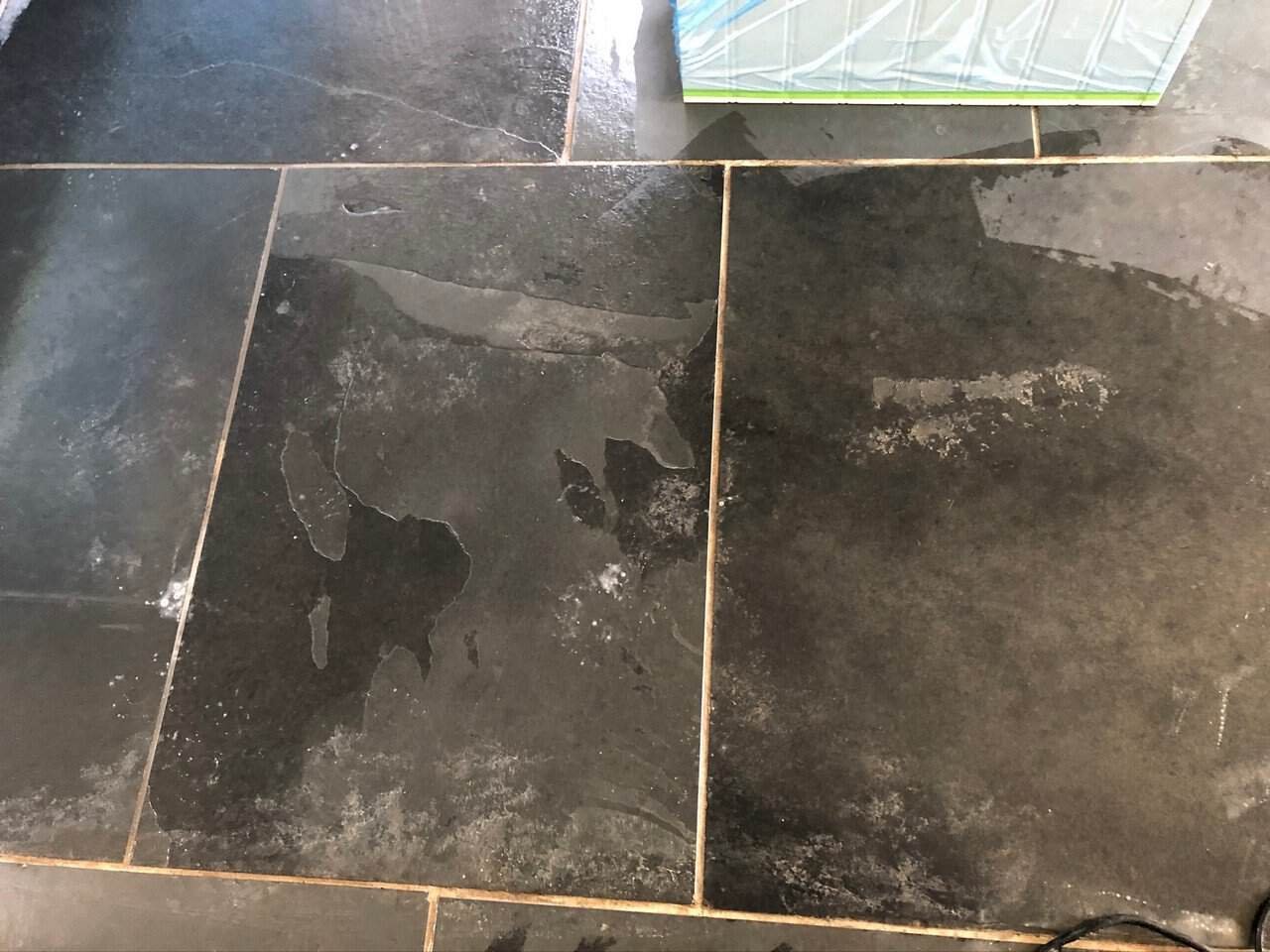
The aged tiles possessed a distinctive character that required careful restoration.
Understanding the Causes of Slate Tile Deterioration in Priddy: Fading Colours and Loss of Definition
What Factors Lead to Slate Floors Looking Worn Instead of Damaged?
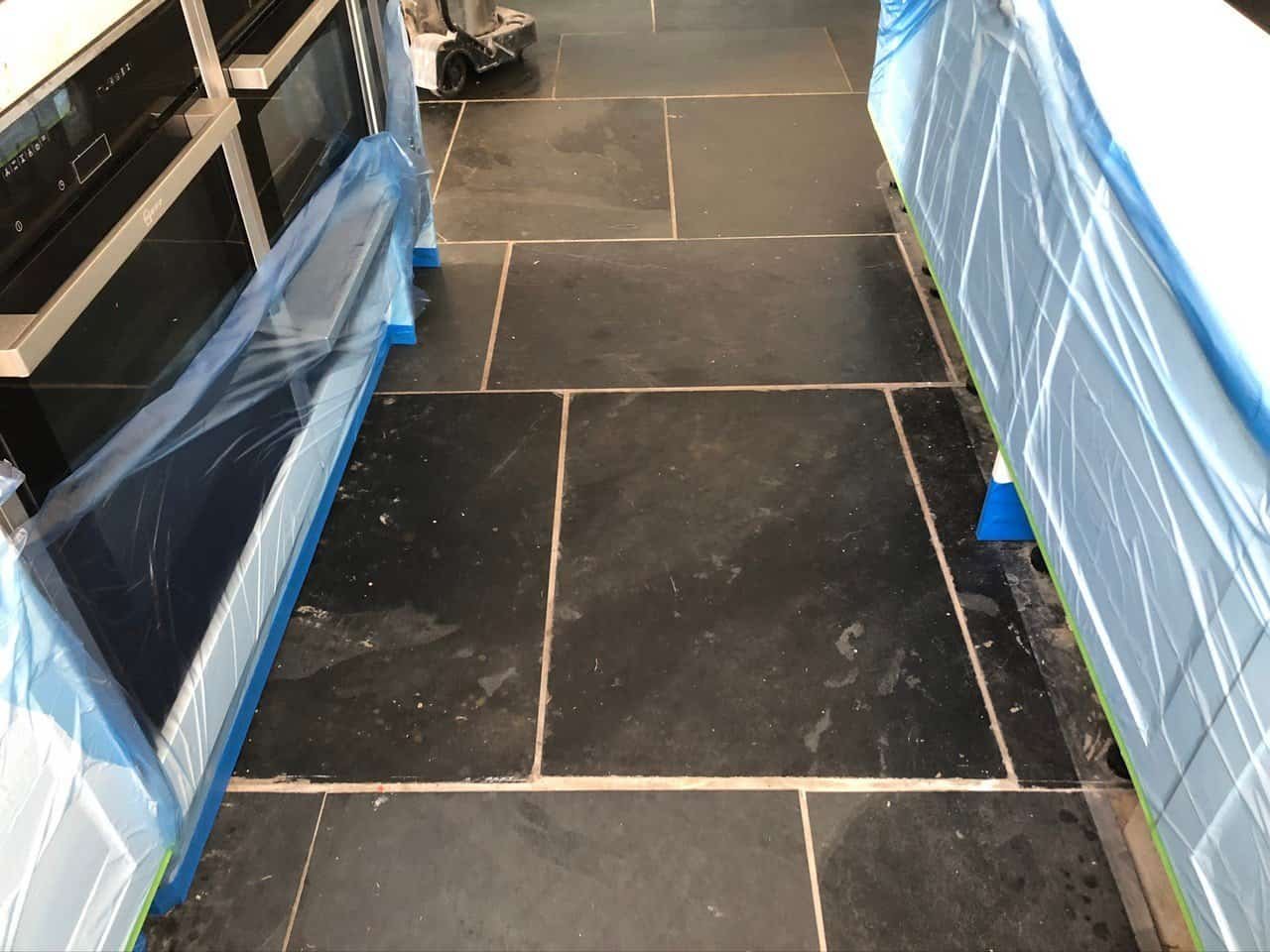
When slate tiles appear excessively dirty, lack vibrancy, and show faded colours yet remain structurally intact, it typically signals that the floor is hiding its original beauty rather than being genuinely damaged. In Priddy, a homeowner observed that their kitchen and hallway floor seemed lacklustre and featured darkened joints, detracting from the overall aesthetic in high-traffic areas.
The rich colour variations associated with older slate floors in rural Somerset had significantly diminished. The tiles appeared drab, the grout lines were discoloured, and the textured surface failed to effectively reflect light. Previous cleaning attempts had been unsuccessful, resulting in a floor that appeared tired and aged, even upon close inspection.
The homeowner characterised the slate as excessively dirty and lifeless, noting that some grout lines were beginning to loosen. This realisation was crucial, as it differentiated between a floor that simply looked neglected and one that had genuinely reached the end of its functional life. Starting the project with a clear understanding of the floor’s visible condition was vital to revealing its inherent beauty.
How Does the Local Environment in Priddy Influence Slate Floor Wear?
Properties in Priddy predominantly reflect rural architecture, typically located within the BA5 Wells postcode area. This includes older stone cottages, detached farmhouses, converted barns, and some modern residences, contrasting sharply with dense terraced housing. Slate floors are commonly found in entrance halls, boot rooms, kitchens, utility areas, and open-plan kitchen-dining spaces, all of which experience daily foot traffic from gardens, yards, and parking areas.
In older properties, slate is often installed over less modern subfloors, while converted barns and newer extensions create larger, multifunctional family spaces with direct outdoor access. The floor plays a crucial role in daily household activities, serving practical needs that extend beyond simple aesthetics.
The primary challenge faced by residents in Priddy arises from the impact of rural foot traffic, which introduces grit, soil, and moisture from the environment. Over time, these elements can dull the slate’s appearance, darken grout lines, and cause uneven wear along frequently traversed paths. Older stone buildings may retain more moisture at the flooring level, necessitating careful cleaning and sealing that respects the building’s natural breathability.
In the kitchen and hallway, dull patches became increasingly apparent as these areas served as primary thoroughfares within the home. Garden grit, wet footwear, and constant movement left more noticeable marks on the busiest routes compared to the quieter edges. This often results in an inconsistent loss of colour and definition, diminishing the overall appearance of care in the space.
Why Is It Crucial to Maintain the Unique Character of the Slate Floor?
The naturally riven texture of the slate contributed significantly to its historical significance and local character. The tiles displayed ridges, troughs, and unique colour variations, steering clear of a flat, manufactured look. The visible problems stemmed from the accumulation of soil and dullness that masked this intrinsic character. The aim was to restore the textured finish without giving the floor an overly new appearance.
This surface texture added considerable charm to the Priddy floor, making it well-suited for the older rural environment. A completely flat look would appear out of place, particularly given the floor’s role in kitchen activities, hallway traffic, and outdoor access. The client sought to rejuvenate the floor while preserving the age and character that made it an essential part of the property.
The noticeable decline in visual appeal was particularly evident where the original colour variations should have been prominent. Dark and light stones merged into a tired expanse, and the grout lines failed to clearly define each tile. A floor that should have anchored the room instead became a mere backdrop.
What Evidence Did the Homeowner Need to Trust in the Floor’s Potential for Improvement?
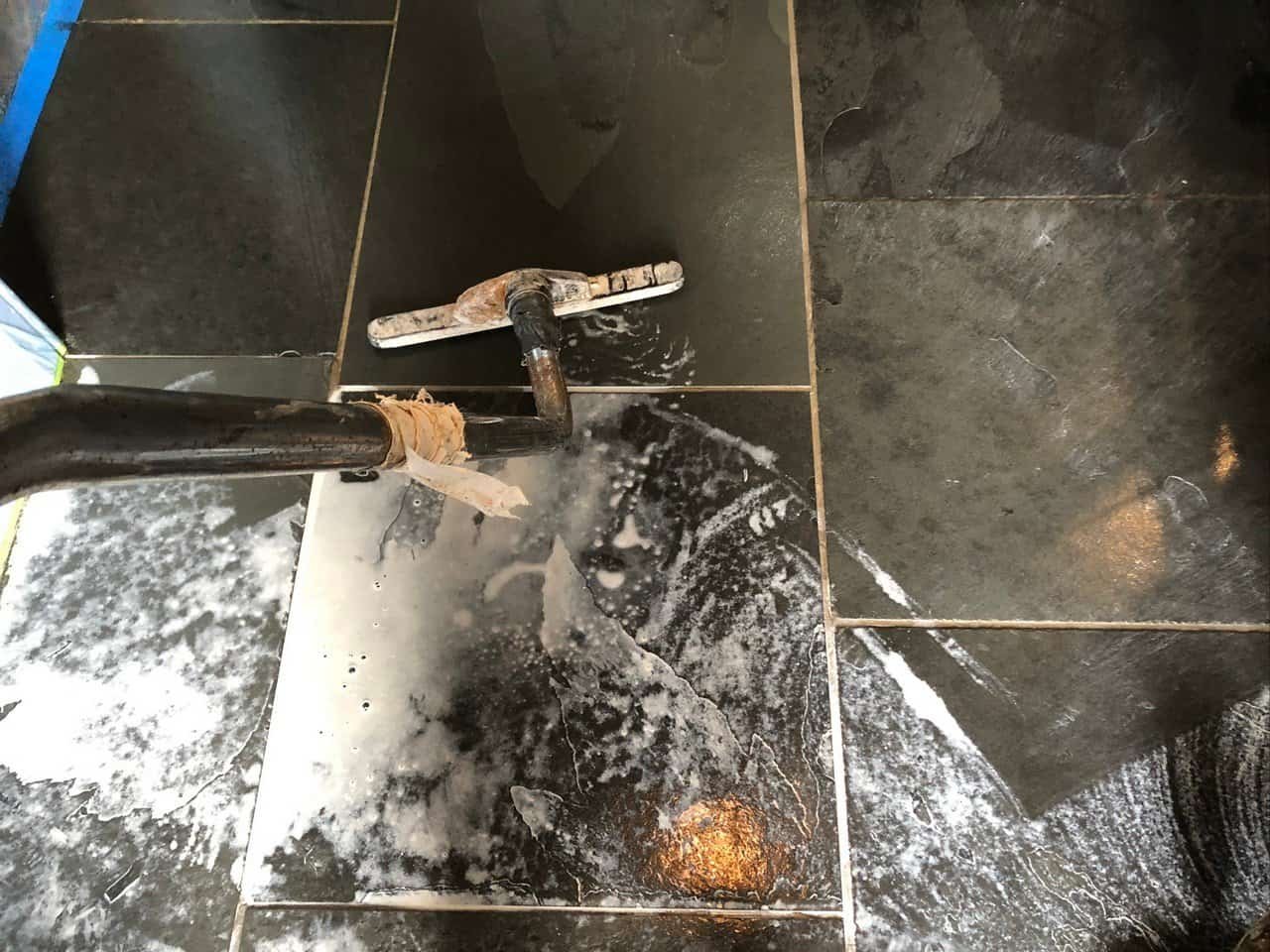
The initial condition of the slate clearly indicated that this was a cleaning and sealing project rather than one requiring replacement. The slate effectively covered the kitchen and hallway, and the overall layout remained functional. The issues lay in the finish, the level of soiling, and the worn appearance that prevented the floor from enhancing the home’s aesthetic value.
The first impression was both emotional and practical; a tired stone floor can render an otherwise well-maintained room feeling incomplete. The homeowner possessed a functional floor but lacked the depth, colour, and permanence typically associated with slate. This project aimed for a visible transformation from dull and contaminated to clean, defined, and well-protected.
Maintaining realistic expectations about the floor’s nature was also crucial. The natural variation in slate is a feature, not a flaw, and older rural floors seldom resemble uniform showroom tiles. The goal was to achieve a significantly improved, clean floor that retained its authentic surface character.
Investigating the Effects of Old Sealers and Embedded Grime on Slate Floor Appearance and Maintenance
Build-ups of old sealer and trapped grime can cause a slate floor to appear dirty shortly after cleaning, as contaminants remain lodged within the surface and grout. On the Priddy floor, there was a noticeable accumulation, edge build-up, and an uneven finish where old protective layers had deteriorated in some areas while excess remained in others. For practical insights into why slate floors remain dull after mopping, refer to this guide on slate floor dullness, which highlights patterns similar to those observed in this project.
Old sealer can trap grime and create an illusion of deterioration in otherwise sound slate.
The textured surface made the flat appearance more resistant to change because recessed areas retained application residue and dirt beyond the reach of routine mopping. The floor was not merely dusty; the combination of old protection, surface contamination, and darker grout lines obscured the original definition of the slate. This clarifies why conventional cleaning methods had failed to achieve a clean and appealing result.
How Thorough Cleaning Revitalised the Slate While Preserving Its Original Texture
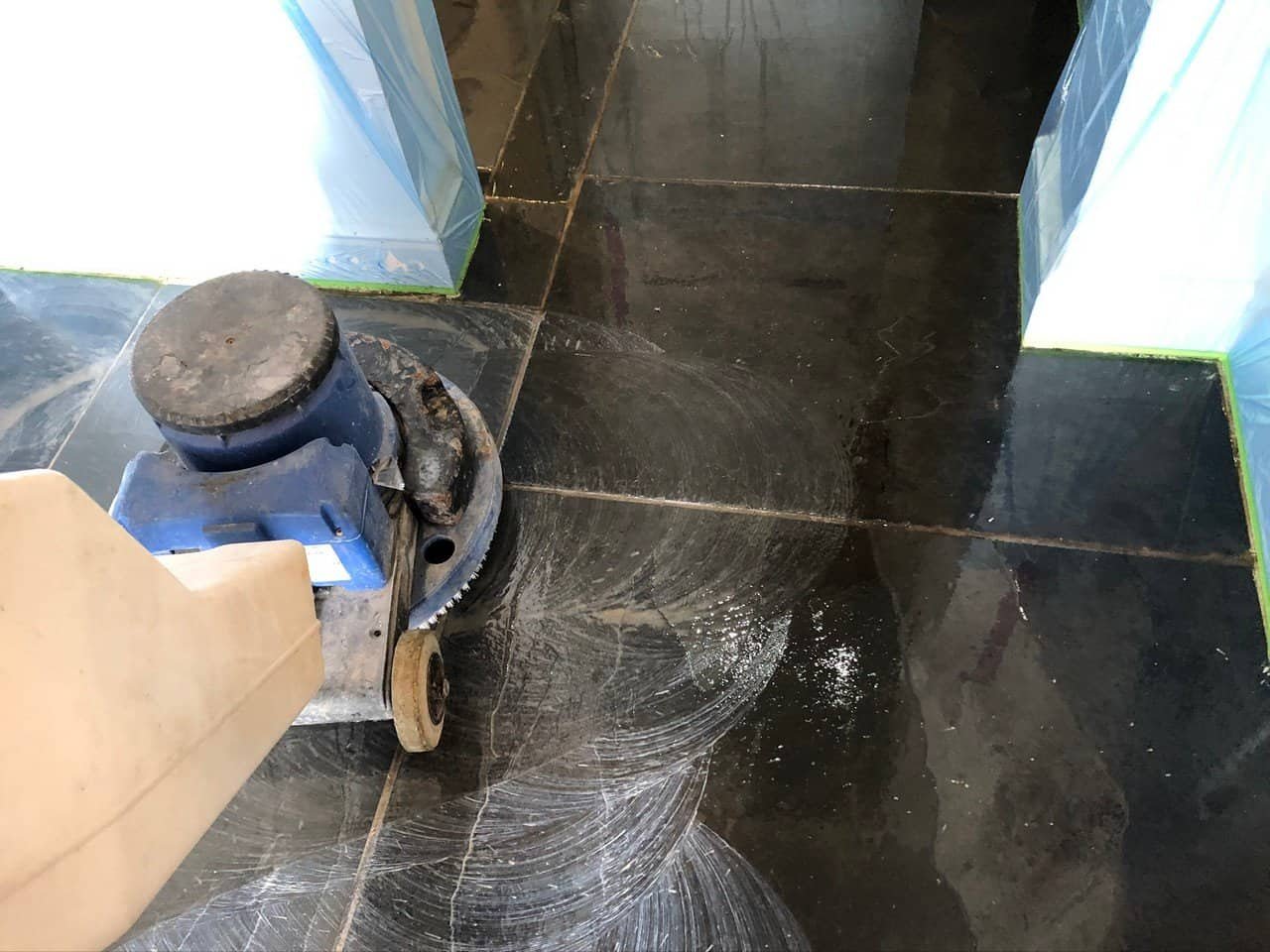
Rushing the cleaning process on older riven slate can dislodge dirt but may also jeopardise the qualities that make the floor worthy of preservation. The Priddy floor was approached as a comprehensive case study rather than a DIY project, ensuring that the methodology aligned with the floor’s condition rather than adhering to a rigid protocol. Slate, a fine-grained metamorphic rock, cleaves along natural planes; its layered structure limits mechanical polishing, confining restoration to cleaning and sealing while requiring sensitivity to aggressive cleaning products.
Controlled alkaline cleaning effectively loosened organic soil through degreasing, emulsification, and surfactants operating at an alkaline pH. Adequate dwell time was allowed for the cleaning solution, followed by agitation with a slow-speed machine and thorough rinsing to ensure no residue remained on the surface. The goal was to eliminate grease and contaminants without compromising the older textured finish.
Slurry extraction efficiently removed loosened residue before it could settle back into the riven surface. A wet vacuum, pressurised rinse, and careful contamination management facilitated the removal of slurry, fresh rinse water, and remaining soiled residue from both the surface and grout. Similar evidence can be found in the cleaning of a Corris slate floor, where the emphasis was on residue removal rather than aggressive surface alteration.
Demonstrating the Transformation: Revitalised Slate Colours, Enhanced Grout Clarity, and Secured Historical Finish
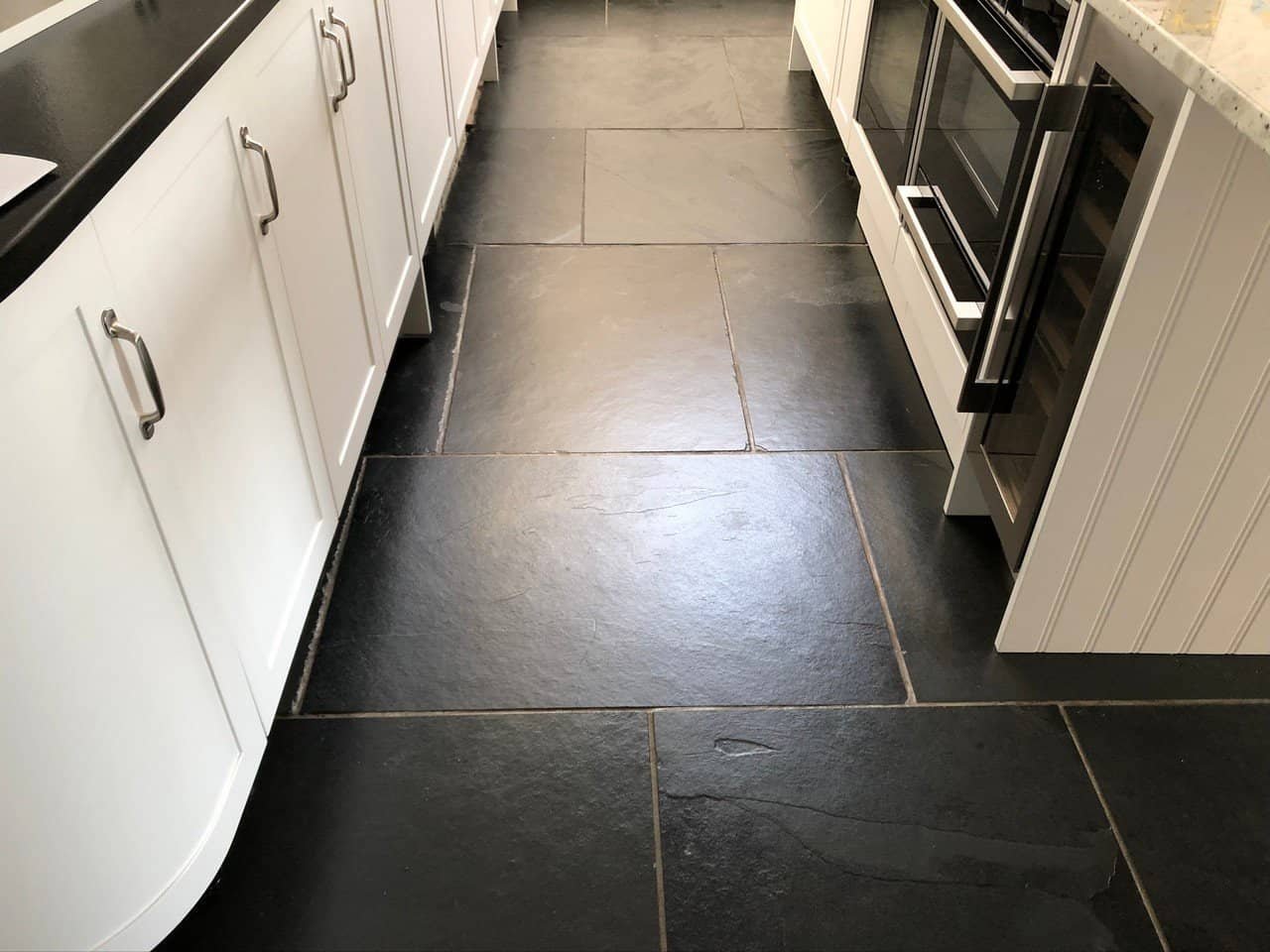
<a href=”https://fabritec.org/cleaning-slate-floors-revive-dull-surfaces-easily/”>Before cleaning</a>, the slate appeared drab and uninspiring. Following the cleaning and sealing process, the colours, grout clarity, and historical character became vividly apparent once again. The tile surfaces had lost their contrast; the grout lines looked dark, and the floor no longer served as the striking focal point expected in a kitchen and hallway. Although the surface remained fundamentally sound, the outdated finish conveyed a misleading impression of deterioration.
<a href=”https://fabritec.org/wax-or-sealant-after-cleaning-terrazzo-which-to-choose/”>After cleaning</a>, the floor regained its colour depth, defined tile edges, and a low-sheen protective finish that perfectly complemented the older property. A urethane coating was applied over a dry substrate to ensure high durability, wear resistance, a controlled gloss sheen, and an enhanced wet-look finish without transforming the floor into a separate sealing guide. David Allen’s extensive experience in stone floor restoration over 30 years informed the judgement necessary to balance colour revival with character preservation.
The restored floor became significantly easier to clean and maintain, as grime no longer lingered in failing residues or open joints. Implementing appropriate ongoing maintenance — including the use of pH-neutral cleaning products, removing grit before wet mopping, and resealing at recommended intervals — is essential for prolonging the floor’s lifespan. For additional maintenance routines, refer to this guide on cleaning and sealing slate floors. Steam cleaning should be avoided, as heat can soften protective films and drive moisture into the textured surface.
Recognising the Importance of Cleaning and Sealing the Priddy Slate Floor Rather than Opting for a Separate Repair Process
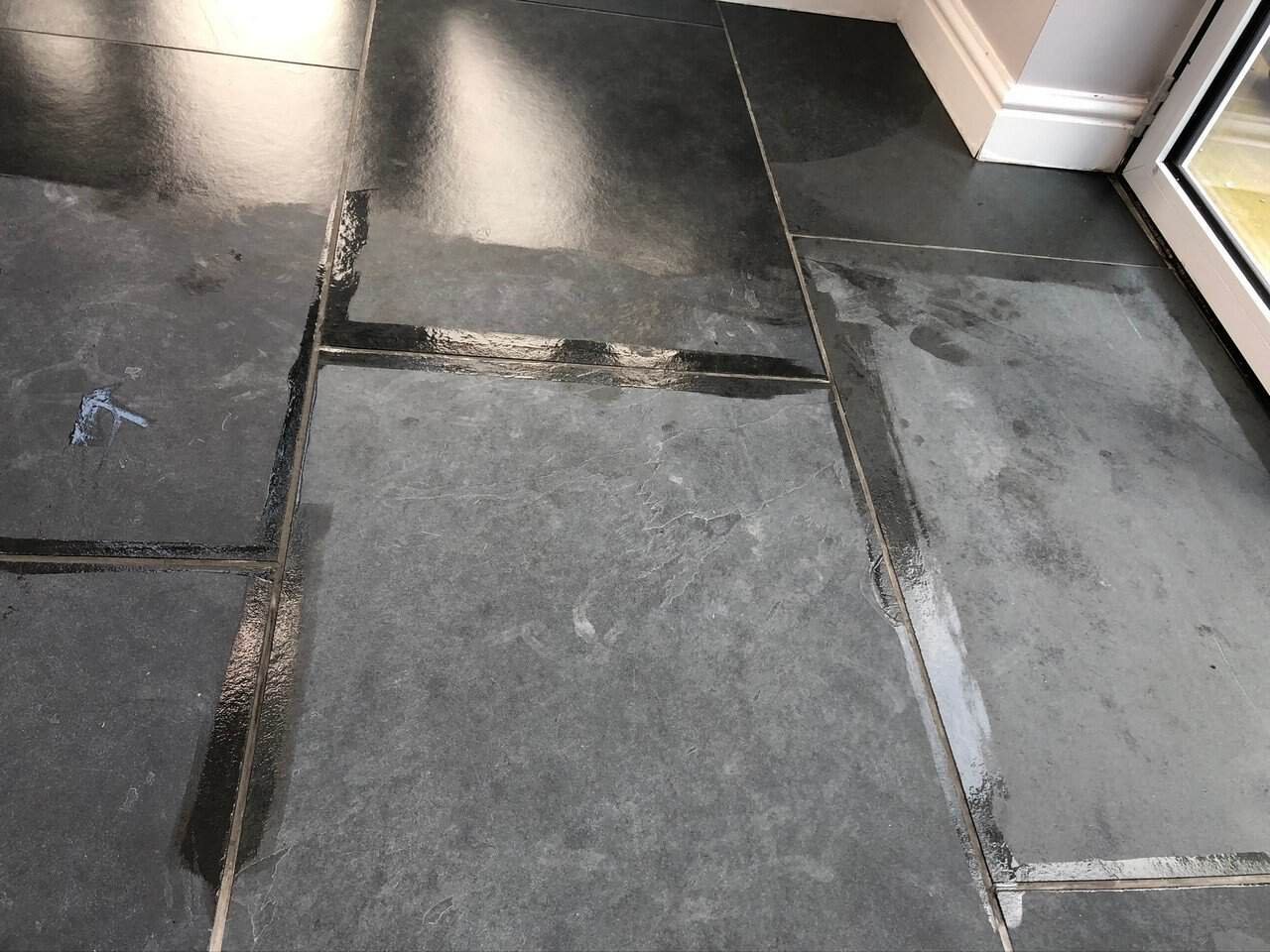
This project clearly illustrated the necessity for slate cleaning and sealing, as the floor required controlled cleaning, protection, and lifecycle considerations rather than a separate repair approach. The loose grout and worn surface were interconnected issues: the accumulation of old coatings, trapped grime, and worn protection had rendered the floor challenging to interpret. The work effectively enhanced its appearance and cleanability without venturing into replacement, grinding, or independent repair advice.
The choice of protective finish aimed to mitigate rapid re-soiling after cleaning had revealed the slate’s true condition. Impregnating sealers preserve a natural finish, while topical systems are employed where a colour-enhanced or low-sheen appearance is desired. This distinction is crucial because the behaviour of old surface film and new protection differs significantly. Broader insights into slate behaviour, cleaning, sealing, and lifecycle considerations can be found in this guide on slate floors in UK homes, detailing how various installations respond over time.
The outcome in Priddy highlights the importance of aligning interventions with the actual issues. The floor looked dramatically revived, retained its authenticity to the home, and became easier to maintain due to the focus on cleaning and sealing the existing surface rather than initiating a separate restoration process.

David Allen — Abbey Floor Care
David Allen has dedicated over 30 years to restoring stone and tile floors across the UK through Abbey Floor Care. This Priddy case study illustrates how precise slate cleaning and sealing rejuvenated a dull, heavily soiled kitchen and hallway floor while maintaining its original textured character.
The Article Slate Floor Cleaning and Sealing Revitalised Colour first appeared on https://www.abbeyfloorcare.co.uk
The Article Slate Floor Cleaning and Sealing for Vibrant Colours appeared first on https://fabritec.org
The Article Slate Floor Cleaning and Sealing for Bright, Lasting Colours Was Found On https://limitsofstrategy.com
The Article Slate Floor Cleaning and Sealing for Vibrant, Long-Lasting Finish found first on https://electroquench.com