Discover an innovative Welsh peace gong, inspired by the Mabinogi and the Deiseb Heddwch, the Welsh Women’s Peace Petition of 1923–24. This project seamlessly blends storytelling, skilled craftsmanship, and a commitment to promoting peace in public life.
Exploring the Mabinogi, Peace Movements, and the Importance of the Deiseb Heddwch
Examining the Connection Between Stone and Metal in Welsh Heritage
History manifests in diverse forms, from the texture of timber to the rich slate of Welsh quarries and the resonant tones of crafted metal.
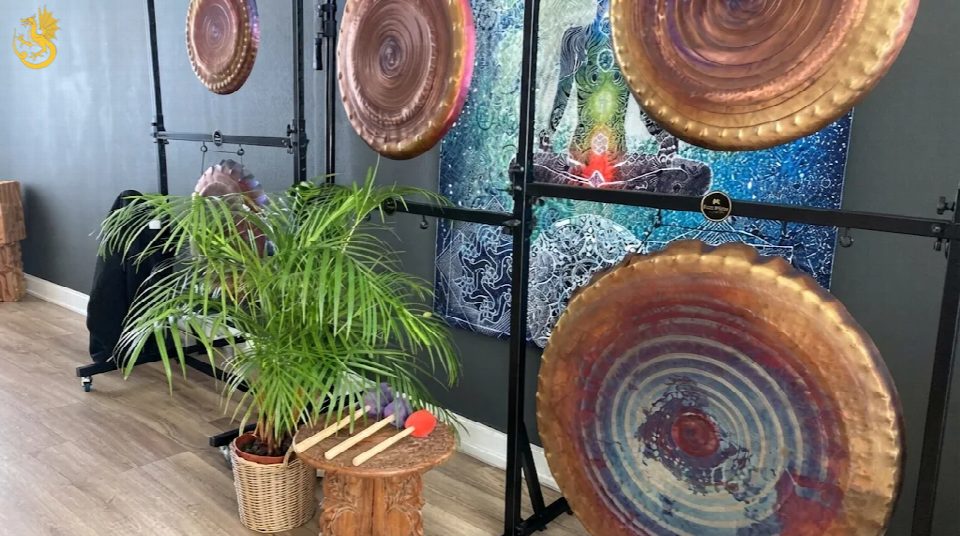
For Sarah Ward and her husband, Ashley, this resonance marks the commencement of an exciting initiative: a Welsh peace gong, adorned with imagery inspired by the Mabinogi, designed for use at public marches and community gatherings.
Through their collaboration with Awen Sounds, they seek to weave together storytelling and skilled craftsmanship, honouring the Welsh Women’s Peace Petition of 1923–24, known as the Deiseb Heddwch.
These legacies showcase distinct yet interconnected heritages. The Mabinogi includes narratives of courtesy, conflict, sorrow, and power dynamics.
Conversely, the petition recounts the efforts of women who united to champion a global appeal for peace. The gong aims to draw inspiration from both traditions, recognising that medieval tales and contemporary activism often communicate through different languages.
This gong serves both a practical and symbolic purpose: it is a portable object that fosters gathering and reflection. The intricate imagery engages visually, while the sound inspires moments of contemplation during events.
The familial connections lend this initiative a unique significance within House of Rhodri. Sarah, as the niece of the author, plays a prominent role in the project’s family narrative.
Her involvement bridges the preservation of family history with a vibrant creative response to the stories and responsibilities inherited from past generations.
How Does the Mabinogi Reflect Peace Through Its Four Branches?
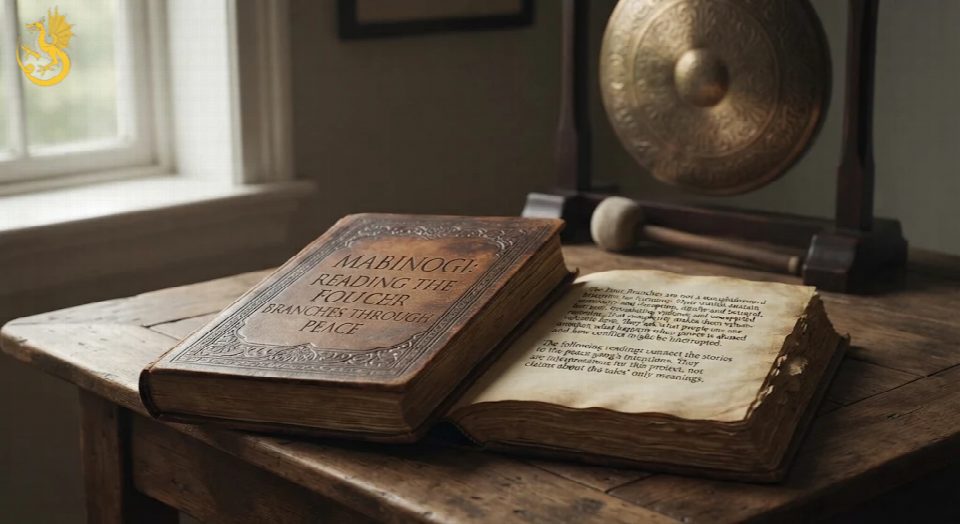
The Four Branches do not provide a simple recipe for harmony. Their narratives encapsulate themes of generosity and deceit, loyalty and betrayal, profound violence, and unexpected restraint. This complexity enhances their relevance to our contemporary context.
They prompt essential questions about our responsibilities towards one another, the repercussions of abused power, and the ways in which conflict might be transformed.
The subsequent interpretations link these narratives to the mission behind the peace gong. These readings offer insights for this project, rather than definitive conclusions regarding the stories.
The First Branch: Pwyll, Prince of Dyfed
A pivotal moment in the First Branch commences with an unsuccessful chase. Pwyll observes Rhiannon riding past, yet neither he nor his companions can catch her. Despite their determined efforts, they remain distanced.
Eventually, Pwyll calls out, requesting her to pause. She obliges.
This encounter signifies a meaningful behavioural change: a relationship begins when pursuit shifts to a respectful request for interaction.
Pwyll does not require a faster horse; he needs to engage in meaningful conversation, and Rhiannon must choose to respond.
While the broader narrative includes elements of violence and manipulation, this moment exemplifies how courtesy can achieve what force and speed cannot.
It serves as a reflective point for the proposed instrument: peace may rely not solely on individual determination but also on the approach taken towards others.
The Second Branch: Branwen, Daughter of Llyr
The Second Branch confronts the devastating aftermath of conflict between Britain and Ireland. Insults, mistreatment, and retaliatory actions escalate into destruction, leaving few survivors.
Branwen’s tale humanises the impact of conflict: the losses are felt by individuals whose relationships transcend the divides that incite violence.
After the hostilities, the remaining companions spend seven years feasting at Harlech, listening to the enchanting birds of Rhiannon.
In other Mabinogion tales, particularly in Culhwch and Olwen, these birds are said to possess the power to awaken the dead and lull the living into peaceful slumber.
In relation to the peace gong, these birds symbolise a sound that transforms the listener’s experience. Their song evokes remembrance, respite, and the opportunity to focus on matters beyond the immediate pressures of conflict.
This perspective does not diminish the sorrow inherent in the branch. The birds cannot undo the devastation that has transpired.
Their existence amidst the aftermath allows both restoration and loss to coexist, rather than presenting a simplistic promise that harmony can rectify everything.
The Third Branch: Manawydan, Son of Llyr
Manawydan’s tale highlights craftsmanship. Faced with an enchanted yet desolate land, he turns to trade and creation.
When his success in commerce incites hostility, he consistently opts to progress rather than accept Pryderi’s challenge to battle.
His patience resonates with the gong’s purpose. Skill fosters continuity while restraint prevents disputes from escalating into further violence.
Craftsmanship alone does not lift the enchantment. Manawydan gains leverage by threatening to hang a captured mouse, revealed to be the enchanter’s wife.
This decisive action secures the release of his companions and breaks the enchantment over Dyfed.
This narrative does not convey a straightforward moral of peaceful persuasion. Its resolution involves pressures, demands, and carefully negotiated agreements.
The significance of this complexity lies in recognising that resolving conflict often necessitates more than goodwill, and the conditions of any settlement merit as much scrutiny as the desire to achieve one.
The Fourth Branch: Math, Son of Mathonwy
The Fourth Branch sharply illustrates the abuse of power. Its betrayals and transformations provoke critical questions regarding the treatment of individuals as mere instruments of another’s will.
For Sarah and Ashley’s initiative, the transformations involving Blodeuwedd and Lleu Llaw Gyffes also invite contemplation on humanity’s connection with the natural world.
Human aspirations are pursued through bodies, creatures, and materials entwined in the struggle for control.
This ecological interpretation resonates with this contemporary endeavour rather than serving as a straightforward moral from the tale. It raises questions about the meaning of responsibility when the consequences of one’s actions extend beyond the individuals making the choices.
Collectively, the Four Branches provide the gong with a rich visual lexicon embodying both hope and discomfort. Their significance does not lie in presenting peace as simple but in illustrating why it is a challenging pursuit.
Commemorating the Legacy of the Deiseb Heddwch
While the Mabinogi offers narratives for reflection, the Welsh Women’s Peace Petition represents a structured initiative aimed at enacting meaningful change.
In 1923, women across Wales gathered an impressive total of 390,296 signatures for an appeal directed at the women of the United States.
Their request was both ambitious and clear: they urged American women to advocate for their government’s membership in the League of Nations and to support international cooperation as an alternative to warfare.
In 1924, Annie Hughes-Griffiths, Mary Ellis, Elined Prys, and Gladys Thomas transported the petition to America, its signatures housed within an oak chest.
This chest embodied a collective appeal. Each signature belonged to an individual, yet together they formed a substantial request that could traverse the ocean and be presented to others.
For our family, the Deiseb Heddwch holds a direct personal connection. Among its signatories were Sarah Davies from Glasgoed, Rhydlewis, and her youngest daughter, Greta (Margretta) Davies, who signed directly beneath her mother.
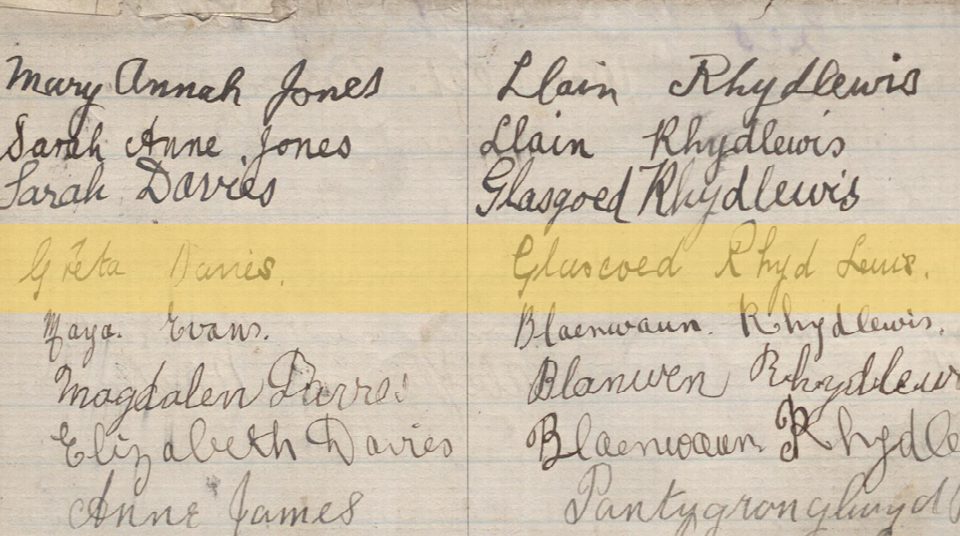
Their signatures connect two generations of our family to this broader movement for peace, bringing the history of the petition closer to our home.
Honouring Aunty Getta
Within our family narrative, Greta (Margretta), the youngest daughter, is fondly remembered as Aunty Getta. Gillian recalls visiting her at Glasgoed during childhood:
“We used to go and see her when we were little. Aunty Getta. I remember quite a lot about those visits. Lynne and I were quite the little rascals and would take her blue tablets, which she used for whitening clothes, and swish them in the stream beside the house, wasting them!”
The envisioned gong draws inspiration from the dynamic between conviction and public action. It does not seek to replicate the petition or claim to represent every woman who endorsed it.
Instead, it aims to honour their efforts by creating a new focal point around which individuals can gather and express their own dedication to peace.
Crafting Sheet Metal into a Public Symbol of Sound
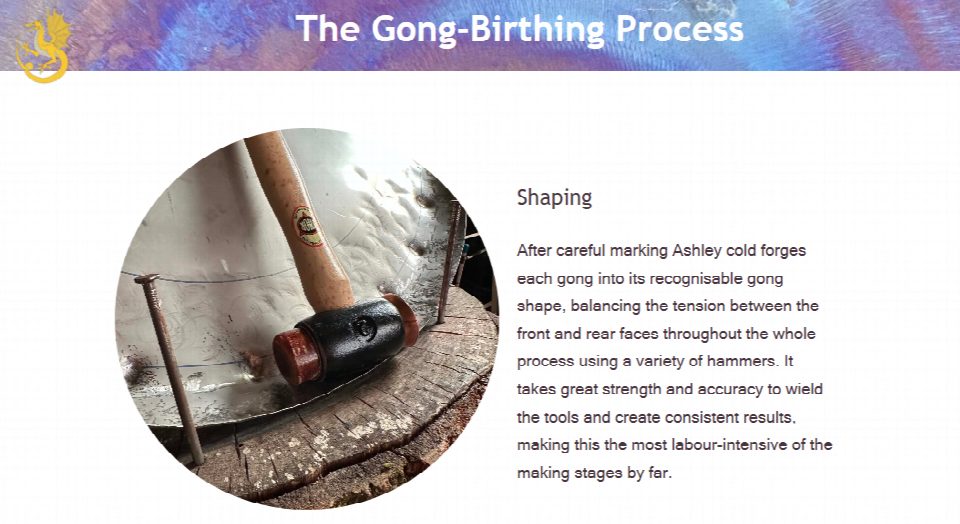
At Awen Sounds, the creation process commences with sheet metal, which is painstakingly hand-forged into a unique instrument. Each strike shapes its form and influences its sound. The surface is subsequently etched and fired outdoors to develop its distinctive colouration.
For the proposed peace gong, this process harmonises imagery and sound into a cohesive object. The stories do not remain confined to written text; their representations can resonate in streets, squares, and community gatherings.
A gong serves as a focal point for gatherings. Its sound can signal a beginning, accompany public declarations, or invite moments of silence.
Responses may differ, yet all will encounter the same invitation to pause and reflect.
This is a contemporary application, not a re-enactment of an ancient Welsh ceremony.
Its connections to the past arise through the chosen stories, the remembered petition, and the intentions of those who craft and carry it.
A New Instrument for the Ongoing Journey Towards Peace
Sarah and Ashley’s proposal revitalises ancient tales for a cause that remains critically unfinished. Courtesy does not resolve every conflict.
Restraint does not eliminate all injustices. Even a meticulously negotiated settlement cannot reverse all that has transpired.
The gong’s significance does not rest on the promise of resolution.
Its link to the Mabinogi is cultural and literary, not a claim of lineage from legendary figures.
Its association with the petition signifies an act of remembrance and response, not an assertion of authority to represent the women who endorsed it.
When struck, it will not declare that peace has been attained. Instead, it will invite those present to listen and contemplate their next steps.
References and Further Reading
This article synthesises literary and historical sources alongside information about a contemporary creative initiative.
The interpretations of the Mabinogi, explored through themes of peace, responsibility, and humanity’s connection with the natural world, are insights offered for this project rather than assertions about the exclusive or original meanings of the stories.
The Mabinogi and the Greater Mabinogion
- The Mabinogion, translated by Lady Charlotte Guest: Project Gutenberg. A freely accessible historical English translation containing the Four Branches and Culhwch and Olwen, rendered here as Kilhwch and Olwen.
Relevant excerpts can be found in “Pwyll Prince of Dyved”, “Branwen the Daughter of Llyr”, “Manawyddan the Son of Llyr”, “Math the Son of Mathonwy”, and “Kilhwch and Olwen”. Variations in spelling and wording exist across translations.
- Manawydan fab Llyr: The Third Branch of the Mabinogi, Mabinogi.net. An English translation accompanied by explanatory notes, including episodes related to saddle-making, shield-making, and shoemaking, as well as the bargaining that leads to the release of Rhiannon and Pryderi and the lifting of the enchantment over Dyfed.
The Four Branches of the Mabinogi should be distinguished from the broader collection commonly referred to as the Mabinogion.
The birds of Rhiannon appear in the Second Branch, while the explicit description of their ability to awaken the dead and soothe the living to rest emerges within Culhwch and Olwen.
The Welsh Women’s Peace Petition
-
The Welsh Women’s Peace Petition: National Library of Wales. Historical context regarding the petition, which amassed 390,296 signatures, the oak chest, and the delegation of Annie Hughes-Griffiths, Mary Ellis, Elined Prys, and Gladys Thomas.
-
The Welsh Women’s Peace Petition: Search the Signatories. The National Library of Wales’s dedicated platform for exploring the petition and its signatories.
-
“Inspired by Annie”: The Story of the 1923 Welsh Women’s Peace Petition to America, Welsh Centre for International Affairs. Further context on the campaign, its organisation, and its aspirations for international peace.
Contemporary Craft and Family Context
- Awen Sounds: Handcrafted Gongs, Made in Wales. An overview of the makers’ practices, describing gongs cold-forged by hand from sheet metal, etched, and fired outdoors to develop their unique colouration.
This provides insight into their general crafting process, rather than a technical specification for the proposed peace gong.
- House of Rhodri: Welsh Family History. The family-history context from which this article arises. The Mabinogi is employed as a literary and cultural reference, not as genealogical evidence.
Project Information
Details regarding the conception, intended imagery, and planned public use of the proposed peace gong were shared with the author by Sarah Ward and her husband, Ashley, via personal communication on 7 November 2026.
Sarah is the author’s niece, a supporter of House of Rhodri, and a documented member of the project’s family lineage.
This relationship provides the personal context for the article; the published sources cited above support its literary, historical, and general craft background.
Further family-history material is accessible in the House of Rhodri Archive, available for a modest subscription fee.
The post Welsh Peace Gong: Exploring the Mabinogi and Heddwch appeared first on Limits Of Strategy.
The Article Welsh Peace Gong: Unveiling the Mabinogi’s Heddwch found first on https://electroquench.com